Fly-Tipping Fines in the UK (2026): What You Risk and How to Dispose Legally
Fly-tipping is one of the few crimes where you can be punished without ever leaving your house. Hand a few bags of rubbish or an old wardrobe to a cheap "man with a van" you found online, and if that waste later turns up dumped in a lay-by, you can be fined — even though someone else did the dumping. With over 1.2 million fly-tipping incidents recorded in England in 2024/25 and councils under pressure to act, enforcement has real teeth in 2026: on-the-spot penalties of up to £1,000, unlimited fines in court, and up to five years' imprisonment for the worst offences. This guide sets out exactly what you risk, how the householder duty of care works, how to check a waste carrier's licence in about two minutes, and how to dispose of your junk legally — usually for less than the cost of a single fixed penalty. If you just want the compliant option now, our licensed man and van rubbish removal service issues a digital waste transfer note on every job.
The Penalties in 2026: FPNs, Unlimited Fines and Prison
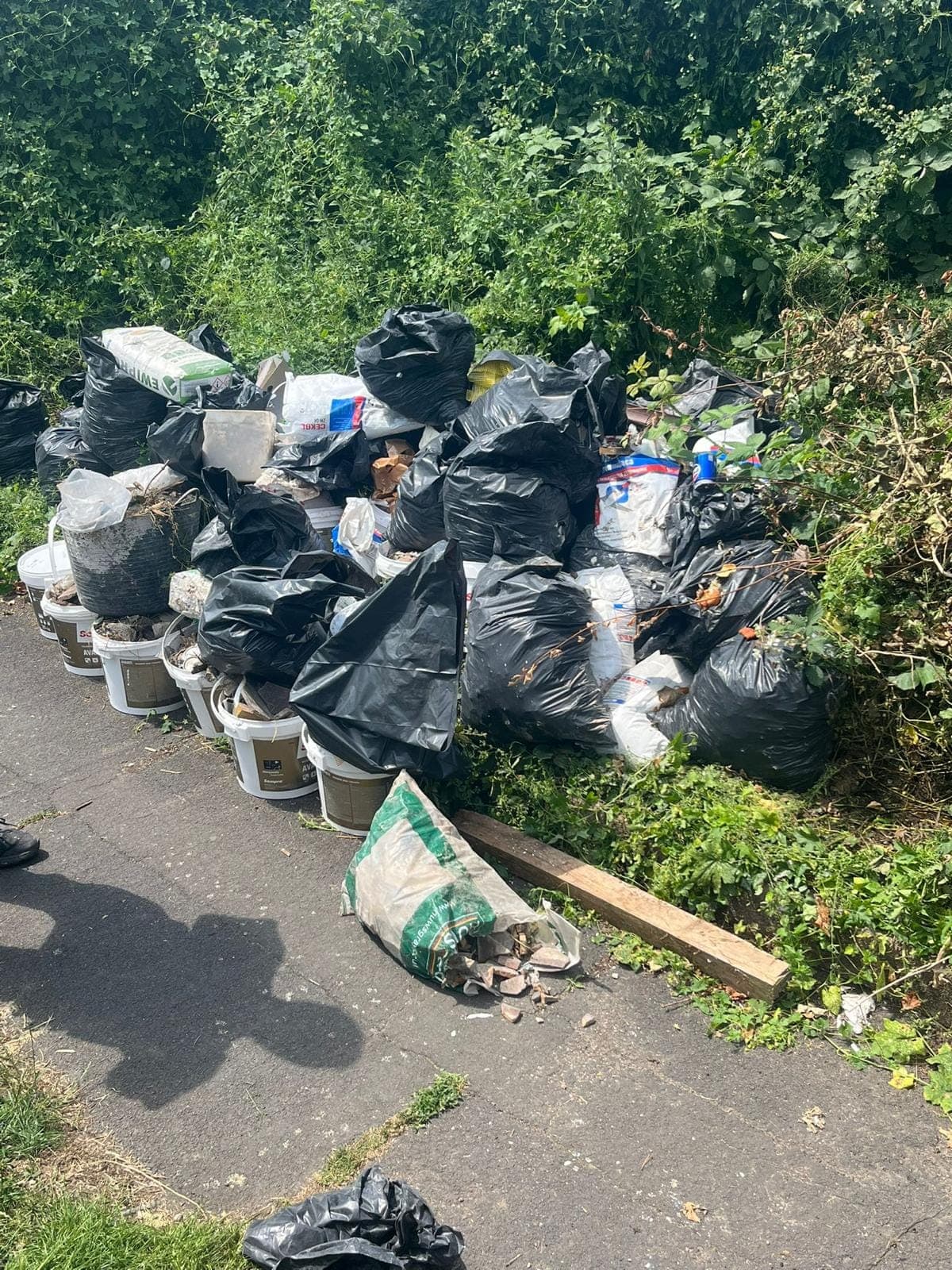
Since 31 July 2023, councils in England have had the power to issue much larger fixed penalty notices (FPNs) — the on-the-spot fines that let them punish waste crime without going to court. The upper limits are now £1,000 for fly-tipping and £600 for a breach of the householder duty of care (more on that below). Each council sets its own amounts within those caps, and many — including most London boroughs — charge at or near the maximum.
An FPN is the lenient outcome. If the case goes to court instead, fly-tipping under the Environmental Protection Act 1990 carries an unlimited fine and up to five years' imprisonment for the most serious cases. Courts can also order you to pay the council's clean-up and investigation costs, and authorities have the power to seize and crush vehicles used for fly-tipping. A conviction also means a criminal record — which for tradespeople can be worse than the fine itself.
Fly-Tipping Penalties at a Glance
| Offence | Maximum fixed penalty (England, 2026) | Maximum on conviction |
|---|---|---|
| Fly-tipping (illegal deposit of waste) | £1,000 FPN | Unlimited fine and/or up to 5 years' imprisonment, plus clean-up and prosecution costs |
| Householder duty of care breach (your waste fly-tipped by someone you gave it to) | £600 FPN | Unlimited fine |
| Transporting waste without a carrier registration | £300 FPN | Fine on conviction |
| Vehicle used in fly-tipping | — | Seizure and destruction of the vehicle |
Amounts vary by council within the national caps, and Wales, Scotland and Northern Ireland set their own regimes — but the direction everywhere is the same: penalties keep rising.
The Householder Trap: Liable Even If You Didn't Dump It
The part most people don't know: under the Environmental Protection Act 1990, every householder has a legal duty of care for their own waste. You must take reasonable steps to ensure anyone who takes waste away from your home is authorised to do so — in practice, that they hold a waste carrier registration with the Environment Agency.
If you hand your rubbish to an unlicensed operator and it gets fly-tipped, the council doesn't need to catch the tipper — the waste is traced back to you, and you can receive an FPN of up to £600 or be prosecuted. "I found him on Facebook and he seemed legit" is not a defence; neither is having paid for the job in good faith.
This is exactly why rock-bottom "cheap man and van" quotes are the trap. Legal disposal has unavoidable costs — licensed transfer stations charge gate fees by weight. A quote that's dramatically below the market can only work if the waste isn't going to a licensed facility. You save £40 on the job and carry the legal risk for it.
How to Check a Waste Carrier's Licence in Two Minutes
- Ask for their waste carrier registration number — it starts with CBDU. Any legitimate firm will give it instantly; ours is CBDU326232 and it's published on every page of this site.
- Search the Environment Agency's public register of waste carriers, brokers and dealers on GOV.UK — you can search by business name or registration number and see the registration status immediately.
- Ask where the waste is going. A licensed carrier can name the transfer station or facility. Vagueness is a red flag.
- Get a waste transfer note (WTN) — the document recording what was taken, when, and by whom. It's your proof of duty of care if anything is ever traced back to you. Central Junk issues a digital WTN on every single job, automatically.
Keep the WTN for at least two years — that's your paper trail if a council ever comes asking.
The Legal Route Costs Less Than the Fine
Set against a £600–£1,000 penalty, legal disposal is cheap. Our licensed collections start from £90 for a small man and van load, with transparent fixed prices published on our prices page — every job includes the labour, licensed disposal at a registered facility, and a digital waste transfer note for your records. You can check prices for your postcode and book online in a couple of minutes, and there's more about how collections work in our FAQ.
The maths is simple: the legal route costs less than the fine, comes with proof, and your junk gets recycled or recovered instead of dumped in a country lane.
Fly-Tipping FAQs
Can I really be fined if someone else dumps my waste?
Yes. The householder duty of care makes you responsible for choosing an authorised carrier. If your waste is fly-tipped and traced back to you, you face an FPN of up to £600 or prosecution — regardless of who physically dumped it.
Is leaving furniture next to a bin or outside a charity shop fly-tipping?
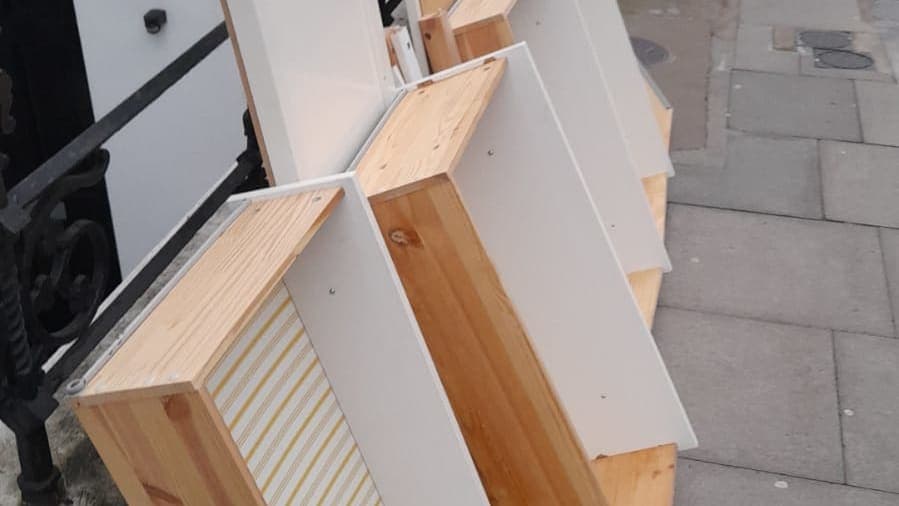
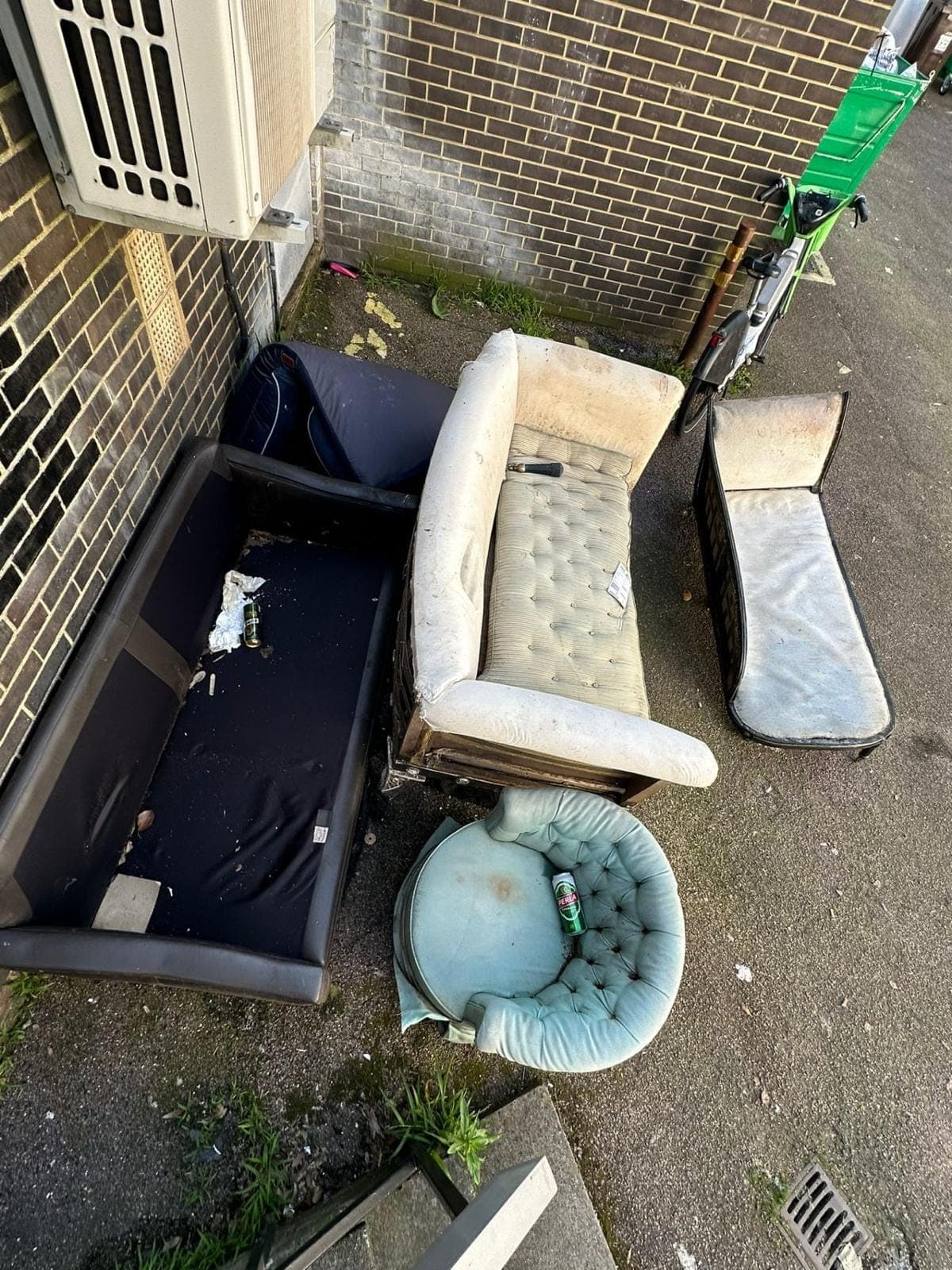
Yes, in most cases. Leaving items beside a communal bin, on the pavement, or outside a closed charity shop counts as an illegal deposit of waste and is enforced as fly-tipping by many councils.
How do I check a waste carrier's licence?
Ask for their CBDU registration number and look it up on the Environment Agency's public register of waste carriers on GOV.UK. It's free and takes about two minutes. If they won't give you a number, walk away.
What is a waste transfer note and do I really need one?
A WTN records who took your waste, what it was and where it went. It's your evidence of complying with the duty of care. Central Junk provides a digital WTN on every collection — keep it for at least two years.
Do these fines apply outside England?
Fly-tipping is illegal across the UK, but the fixed-penalty amounts above are the English caps. Wales, Scotland and Northern Ireland have their own enforcement regimes, and court penalties — unlimited fines and imprisonment — apply UK-wide.
Related Posts
Why Can't Sofas Go in a Skip? POPs Rules Explained (2026)

5 Ways To Cut Down On Plastic Waste At Home